
7 Third-Party Tested Natural Wound Care Spray Facts: NutriCore Vital
Editorial Team
Last Updated: October 26, 2026
Quick Summary
A third-party tested natural wound care spray is verified by an independent lab, not the brand, for microbiological safety and contaminant levels on a specific batch. Ask for a batch-specific certificate of analysis naming the lab, test methods, limits, and date before you buy.
- Rinse a scrape under clean running water first; avoid hydrogen peroxide, rubbing alcohol, and iodine on open wounds.
- A credible test panel screens microbiological limits, heavy metals, residual solvents, and batch stability.
- A certificate of analysis should list tests, results, lab, method, and date for your batch number.
- No-touch spray delivery cleans without hand contact, which matters for mat burns and shared surfaces.
- Seek care if redness spreads, pain worsens after two days, or pus, fever, or chills appear.
Table of Contents
- Why Third-Party Tested Natural Wound Care Spray Matters for Athletes
- How to Clean a Minor Wound Before You Spray
- What Third-Party Tested Skincare Actually Verifies
- Choosing a Wound Care Spray for Athletes
- Wound Cleanser, Antiseptic Spray, or Healing Spray: What the Labels Mean
- When to Seek Care for a Wound
- Add NutriCore Vital to Your Gym Bag Before Your Next Session
- Frequently Asked Questions
Why Third-Party Tested Natural Wound Care Spray Matters for Athletes
The wound-spray market is projected to grow from $542.5 million in 2026 to $738.2 million by 2033, according to Persistence Market Research's market forecast. That growth says something uncomfortable: most athletes buying a third-party tested natural wound care spray still have no idea what "tested" actually means on a label. To understand why other athletes choose natural wound care over conventional options, see our article on naturally healed, naturally driven athletes. At Zombie Sport Co, we built NutriCore Vital around a simple rule: if a claim can't be verified by a lab, it doesn't belong on the bottle. Below, we'll show you what independent testing confirms, how to read a certificate of analysis, and where natural sprays genuinely help a mat-weary athlete.
Here's what most guides get wrong. They treat "natural" and "tested" as the same promise. They aren't. A botanical formula can be perfectly natural and still carry contamination risk if nobody checks the batch.
How to Clean a Minor Wound Before You Spray
Cleaning comes first, always. Rinse the scrape under clean running water long enough to flush out grit, then pat the surrounding skin dry with a clean cloth. Skip the harsh stuff: the American College of Surgeons' wound care guidance cautions that hydrogen peroxide, rubbing alcohol, and iodine can damage tissue when used on open wounds.
Cleansing Steps That Remove Dirt and Debris
- Rinse under clean running water to lift dirt and debris
- Use a clean cloth to wipe away grit from the wound edges
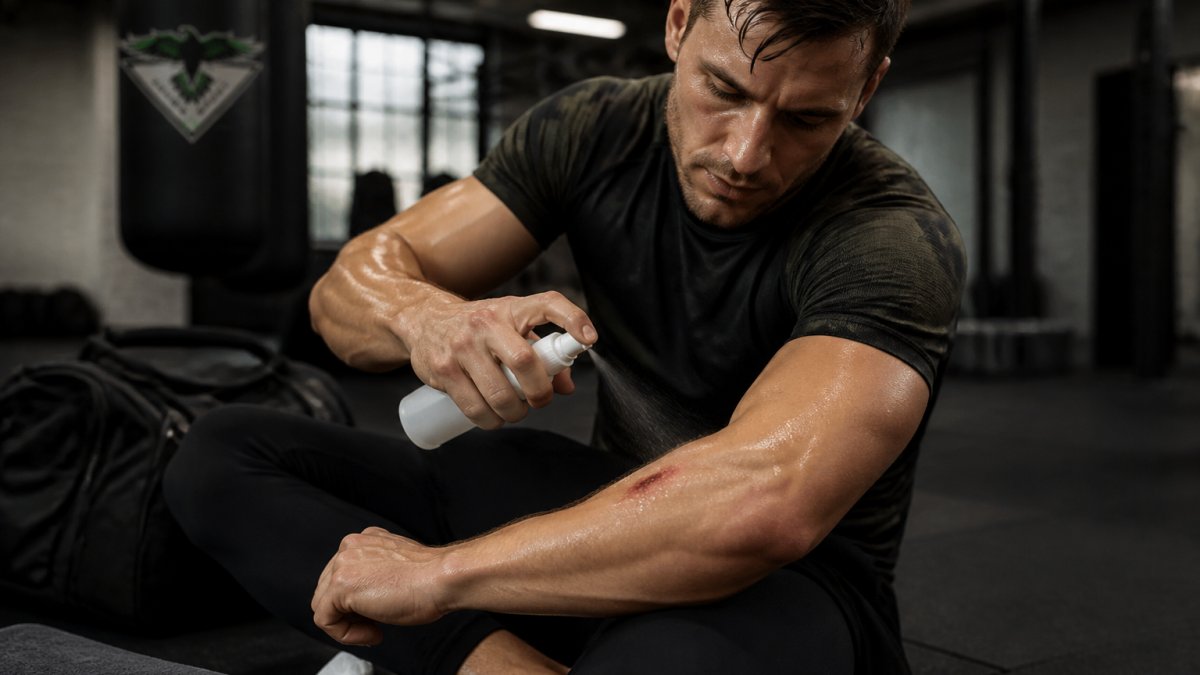
- Pat dry, then apply your spray from a short distance
- Leave it to dry rather than rubbing the formula in
- Repeat cleansing before each application during the treatment period
If your skin runs sensitive, our guide to wound spray rules for sensitive skin walks through gentler application before you spray.
What Third-Party Tested Skincare Actually Verifies
Third-party tested skincare means an independent laboratory, not the brand, has examined a batch for microbiological safety and contaminant levels. For a deeper look at the natural ingredients and the science behind the formula's testing claims, see the science behind coconut oil and athletic wound care.
Most labels stop there. Here is the part the label leaves out: "tested" is not a regulated term for topical sprays the way "organic" is regulated for food. No single federal standard defines what a brand must test before printing it.
What a Real Test Panel Covers
A credible third-party panel for a botanical wound spray typically screens for four things:
- Microbiological limits, total aerobic microbial count, yeast and mold, and the absence of pathogens such as Staphylococcus aureus, Pseudomonas aeruginosa, E. coli, and Candida albicans. These are the organisms most likely to contaminate a water- or vinegar-based botanical formula.
- Heavy metals, lead, arsenic, cadmium, and mercury, which can concentrate in plant-derived oils and extracts depending on soil and sourcing.
- Residual solvents and contaminants, relevant when extracts are processed rather than cold-pressed.
- Batch stability, whether the formula holds its stated pH and microbial profile over its shelf life, not just on the day it was made.
A panel that lists only "passed" without naming the test method or the limit is not a panel. It is a checkbox.
Reading a Certificate of Analysis
A certificate of analysis is a lab document tied to a specific batch number. It should list the tests run, the results, the testing lab, the method used, and the date. Look for microbiological panels and contaminant screening. If a brand can't produce a batch-specific document on request, "third-party tested" is a marketing phrase, not a fact.
Use this checklist before you trust the claim:
| What to look for | Why it matters |
|---|---|
| Batch or lot number on the CoA | Proves the document matches the bottle you hold, not a one-time sample |
| Named testing laboratory | An independent lab, not the brand's own QC bench |
| Specific test methods and limits | "Passed" means nothing without the threshold it passed |
| Date of testing | A two-year-old CoA does not describe this year's batch |
| Pathogen panel, not just total count | A low total count can still hide a specific pathogen |
Pro Tip
Ask for the CoA before you buy, not after. A brand that has batch documentation ready usually has a process behind it. A brand that promises to "look into it" is telling you something too.
Why Batch Consistency Is the Hard Part
One clean lab result proves one clean batch. The harder claim is that every batch is clean, which requires a written testing schedule, every lot, or a defined sampling frequency, plus retention samples the brand keeps in case a customer question arises.
Choosing a Wound Care Spray for Athletes
For a grappler or wrestler, the right spray does three jobs: it cleans without contact, it supports healing, and it avoids adding pressure to tender skin. No-touch delivery is the feature most athletes underestimate. Spreading balm by hand over a fresh mat burn hurts, and hands carry bacteria.
We built our all-natural NutriCore Vital Recovery Spray for exactly that moment. Point, spray, done. It's formulated with apple cider vinegar, tea tree, helichrysum, and frankincense oils, and each batch is third-party laboratory certified for microbiological safety.
All-Natural NutriCore Vital Recovery Spray →

Best for: combat sports athletes and active adults managing cuts, scrapes, and mat burns. Skip if: you have a deep wound, heavy bleeding, or signs of infection. That needs a clinician, not a spray.
Wound Cleanser, Antiseptic Spray, or Healing Spray: What the Labels Mean
These three labels describe different jobs, and confusing them leads to bad buys. A wound cleanser removes dirt and debris. An antiseptic spray targets microbes on the skin. A healing spray supports the skin's recovery process after cleaning.
| Label | Primary Job | When to Use |
|---|---|---|
| Wound cleanser | Remove dirt and debris | First, on a fresh scrape |
| Antiseptic spray | Reduce microbes on skin | After cleansing |
| Healing spray | Support skin recovery | During the treatment period |
Most natural sprays blend functions, so read the ingredient list rather than trusting the front label. For context on why natural formulas differ from synthetic wound care products, read our breakdown of the shift from synthetics to all-natural wound care.
When to Seek Care for a Wound
Some wounds need a clinician, not a spray. Seek care if bleeding won't stop with pressure, if the wound is deep or gaping, or if you see spreading redness, swelling, warmth, pus, or fever. Bites and punctures also warrant a professional look.
The tricky part is that a healing wound and an infected wound look similar for the first day or two. Both can be red, warm, and sore. What separates them is direction and timing, so watch the wound rather than judging it once.
The Monitoring Window
A common pattern practitioners describe: normal inflammation peaks in the first 24 to 48 hours and then improves. Infection tends to get worse after that window, not better. Use a simple daily check:
- Day 1: redness and soreness at the edges are expected. Clean, spray, cover.
- Day 2-3: the redness should be shrinking toward the wound, not spreading away from it. Pain should be easing.
- Day 4 and beyond: the wound should be closing and the surrounding skin should look calmer. If it is not, escalate.
Red Flags That Mean Stop and Get Care
- Redness or streaks spreading away from the wound
- Increasing pain after the first two days instead of decreasing
- Pus, cloudy drainage, or a bad smell
- Fever, chills, or feeling generally unwell
- A wound that stops improving or reopens
- Any bite, puncture, or wound with embedded debris
- A wound on the face, hands, or over a joint
Watch Out
If you have diabetes, poor circulation, or a weakened immune system, the threshold for care is lower. A minor scrape that would heal on its own for most athletes can escalate faster in these groups. Do not wait for the day-4 checkpoint.
What to Do While You Wait
Keep the wound clean and covered, change the dressing daily or when it gets wet or dirty, and do not pick at it.
A 2023 study indexed on PubMed reported that combining a bioabsorbable dressing with an antibacterial spray could reduce infection rate and shorten healing time. That's promising, but it describes a clinical setting, not a gym bag. Watch out: treating a suspected infection at home delays care that actually works.
Key Takeaway
A spray supports cleaning and recovery. It does not replace a clinician when the wound is spreading, deepening, or failing to improve past the first few days.
Add NutriCore Vital to Your Gym Bag Before Your Next Session
Mat burns and scrapes come with the sport. Infections don't have to. Our customers keep telling us the same thing. "First choice when I bleed or get burned," says Sam Alvey, UFC veteran and Karate Combat Champion. That's the standard we build to.
Zombie Sport Co exists for athletes who train on shared surfaces and want care they can verify. NutriCore Vital gives you no-touch application, all-natural ingredients, third-party laboratory certification, and free shipping on topical products.
Frequently Asked Questions
How can you tell whether a wound care product is third-party tested?
Ask the brand for a certificate of analysis from an independent laboratory. That document should name the lab, the batch tested, the contaminants screened for, and the date. A brand that says 'lab tested' without a document you can request is asking you to trust marketing copy. Zombie Sport Co states its topical products are third-party laboratory certified as microbiologically safe and contaminant-free. Request the paperwork before you buy, and check that the batch on the certificate matches the batch on your bottle.
Can you use a natural wound care spray on an open wound?
It depends on the product and the wound. A spray formulated for minor cuts, scrapes, and burns can be applied to clean, shallow wounds, and a no-touch spray avoids pressing a balm into painful skin. Skip it for deep cuts, punctures, heavy bleeding, or wounds that need stitches, and get medical care instead. The American College of Surgeons cautions that hydrogen peroxide, rubbing alcohol, and iodine can damage tissue in open wounds, so read the label rather than reaching for whatever is in the cabinet.
How often should you apply a wound care spray for athletes?
Follow the product directions. NutriCore Vital directs three sprays daily on the affected area, letting it dry between applications. Clean the area first, then spray. Consistency matters more than volume: a spray applied three times a day for the full treatment period gives the wound steady care, while one application after training and nothing else does not. If you train in a shared-surface gym, spray after you shower and before you tape up.
When should you seek care for a wound instead of treating it at home?
Get medical care for deep cuts, puncture wounds, bites, heavy bleeding, wounds that expose fat or muscle, or anything that needs stitches. Also seek care if redness, swelling, warmth, or pus spreads, if you run a fever, or if the wound is not improving after a few days. Athletes on shared mats should be especially alert to spreading redness and boils, which can signal a staph infection. A natural wound care spray supports minor wound care; it does not replace a doctor.
Your next session will bring another scrape. Decide now what you'll spray on it. Get started with Zombie Sport Co and add NutriCore Vital to your gym bag, so the care is already there when the skin breaks.
