

How to Stop Recurring Staph Infections: 7 Steps That Work
Editorial Team
Table of Contents
- Why Staph Infections Keep Coming Back
- Step 1: Get the Right Diagnosis Before You Treat
- Step 2: Master Staph Infection Wound Care From Minute One
- Step 3: Follow a Clinician-Guided Staph Decolonization Treatment Plan
- Step 4: Preventing Staph Infections in Wrestling and Grappling Gyms
- Step 5: Build a Household-Wide Prevention System
- Step 6: Know the Warning Signs That Need a Doctor Now
- Conclusion: Consistency Beats Panic
- Frequently Asked Questions
Last Updated: October 15, 2026
Why Staph Infections Keep Coming Back
If you have cleared a staph infection only to watch another appear weeks later, you know the frustration. Recurring staph infections happen because the bacteria never fully left your body or your environment, treatment killed the active infection but did not remove the source.
At Zombie Sport Co, we work with grapplers, wrestlers, and MMA athletes who deal with this cycle constantly. The mats, locker room, and shared gear keep feeding the same problem.
How Staphylococcus aureus Spreads On and Off the Mats
Staphylococcus aureus is a common bacterium that lives on human skin and in the nose. It spreads through skin-to-skin contact, shared equipment, and contaminated surfaces, in grappling gyms, every roll, shared towel, and uncleaned mat is a transfer point.
The bacteria enter through small breaks in the skin, a mat burn, scrape, or razor nick, and can cause a skin and soft tissue infection ranging from a minor boil to a serious abscess.
Risk Factors That Raise Your Recurrence Odds
Some athletes face higher risk than others. Common factors include:
- Nasal carriage of staph bacteria
- Frequent skin-to-skin contact in training
- Shared towels, razors, or gear
According to the CDC guidance on staph and MRSA, staph bacteria can survive on surfaces and personal items, which is why household spread is so common.
Step 1: Get the Right Diagnosis Before You Treat
You cannot stop recurring staph infections without knowing what you are fighting. Impetigo, cellulitis, ringworm, and staph boils all start with redness and swelling.
A doctor can take a culture to confirm the bacteria and check for MRSA (methicillin-resistant Staphylococcus aureus), which needs different antibiotic therapy than standard staph. Do not self-treat with leftover antibiotics, a wrong diagnosis wastes time and worsens antibiotic resistance.
Watch Out
Using leftover antibiotics or skipping doses feeds antibiotic resistance. It also leaves bacteria alive to cause another infection later.
Step 2: Master Staph Infection Wound Care From Minute One
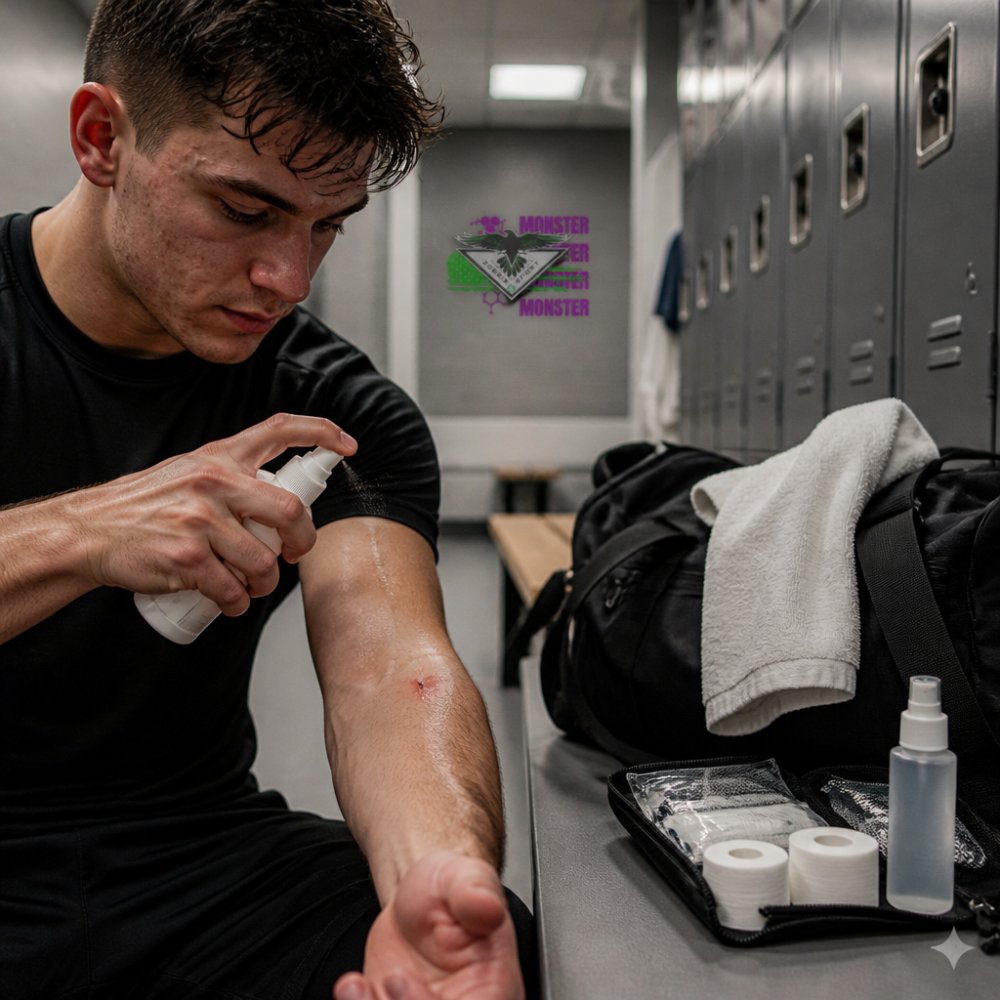
Staph infection wound care starts the moment skin breaks. The faster you clean and cover a wound, the lower your risk of a full infection.
Clean, Cover, and Change: The Daily Routine
Follow this routine every time you get a cut, scrape, or mat burn:
- Wash your hands before touching the wound
- Rinse under clean running water
- Apply a thin layer of an antibacterial balm or spray
- Cover with a clean, dry bandage
- Change bandages daily, or sooner if wet or dirty
- Dispose of old dressings in a sealed bag
For no-touch care, NutriCore Vital Recovery Spray treats tender skin without pressing on it. For deeper coverage, Regenerate RX Protect and Restore Balm combines apple cider vinegar, tea tree oil, and shea butter to support skin repair.


Step 3: Follow a Clinician-Guided Staph Decolonization Treatment Plan
Decolonization separates people who stop getting staph from people who keep getting it. It targets bacteria living on and in your body between infections, not the active boil or abscess. Treat only the flare and the same strain can seed a new infection weeks later.
What Decolonization Actually Targets
Staphylococcus aureus commonly lives in the anterior nares (the front of the nostrils) and also colonizes the armpits, groin, and sometimes the throat. From those sites it can transfer to a mat burn, razor nick, or scratch. A clinician-guided plan reduces that reservoir so your immune system and wound care have less to fight.
Why This Is Not a DIY Protocol
Clinicians commonly see patients who try to self-decolonize with leftover topical antibiotics, harsh antiseptic scrubs, or diluted bleach baths from the internet. That fails for three reasons:
- Wrong agent, wrong site. A cream meant for skin does not clear nasal carriage, and a nasal ointment does not clear the body.
- Wrong duration. Decolonization protocols are time-boxed and sequenced. Stopping early leaves the reservoir partially intact.
- Resistance pressure. Repeated, unsupervised antibiotic use selects for resistant organisms, including MRSA (methicillin-resistant Staphylococcus aureus).
Decolonization is a prescription decision, depending on your history, culture results, whether MRSA is involved, and whether anyone else in your home is colonized.
What a Typical Clinician-Guided Plan Involves
Most practitioners structure decolonization around several coordinated elements, not a single product:
- A prescribed topical antibiotic applied inside the nostrils for a defined number of days.
- An antibacterial skin wash used on the body and hair for a set period, often with specific instructions about contact time and rinsing.
- Fresh bedding and clean clothing during the treatment window, so you are not re-colonizing from fabric.
- Household coordination. If a partner, roommate, or child carries the same strain, treating only one person rarely breaks the cycle.
- A follow-up plan. Some clinicians recheck carriage after treatment, especially for athletes in close-contact sports or people with repeated boils.
When Clinicians Consider Decolonization
Decolonization is not for a single, well-controlled infection. It is usually considered when:
- You have had two or more skin infections in a short period.
- A culture confirms staph or MRSA and the pattern keeps repeating.
- Someone in your household has an active infection or a known carriage history.
Ask your doctor whether anyone else in your home should be evaluated at the same time. Treating one person while another carries the bacteria rarely stops the cycle.
Pro Tip
Bring your culture results and a written timeline of every infection, dates, locations on the body, and whether anything was drained, to your appointment. That history is what helps a clinician decide whether decolonization is appropriate and how to structure it.
Watch Out
Do not start, stop, or repeat a decolonization protocol on your own. Unsupervised antibiotic use is one of the main drivers of resistant staph, and it can leave you colonized with a harder-to-treat strain.
Where Wound Care Fits In
Decolonization reduces the reservoir but does not replace wound care. That is why the real-time step matters: the moment an athlete gets a wound, applying a product like Regenerate RX Protect and Restore Balm or NutriCore Vital Recovery Spray cools the wound, cleans it with acetic acid, calms nerve pain, fights staph and other bacteria and viruses, and feeds cells to speed wound closure, all in one application.
Step 4: Preventing Staph Infections in Wrestling and Grappling Gyms
Preventing staph infections in wrestling and grappling gyms comes down to three habits: shower fast, cover wounds, and never share gear.
Gym owners should clean mats with an EPA-registered disinfectant before and after every session. Athletes should shower with soap immediately after training.
All-Natural Regenerate RX Protect and Restore Balm →
Our Infusion Hygienic Concentrate mixes into a water-based spray, body wash, or soap so you can build skin care into your pre-mat and post-training routine.

| Mistake | Fix | Why It Matters |
|---|---|---|
| Skipping the post-training shower | Shower within 30 minutes | Bacteria multiply fast in sweat |
| Sharing towels or razors | Bring your own, wash after each use | Personal items carry staph |
| Ignoring small cuts | Clean and cover right away | Breaks in skin let bacteria in |
| Reusing unwashed gear | Wash after every session | Fabric holds bacteria |
Step 5: Build a Household-Wide Prevention System
Recurring staph infections often trace back to the home, but most people treat it as an individual problem. If one person carries the bacteria and the household keeps sharing fabric, surfaces, and personal items, the cycle restarts no matter how disciplined the infected person is.
First, Figure Out Whether the Home Is Actually the Source
Before overhauling the whole house, ask a few practical questions:
- Is it the same strain every time? If cultures from two episodes match, a persistent reservoir, on a person or in the environment, is more likely.
- Does anyone else have symptoms? Boils, recurrent "spider bites," or draining wounds in a partner, child, or roommate point to household transmission.
- Did the infections start after a move, a new gym, or a new roommate? That timing can narrow down where exposure is coming from.
If two or more people in the home have had skin infections in the same period, coordinate rather than treat each person in isolation.
Coordinate Measures Across the Household
A household-wide system works when everyone follows the same rules at the same time. Partial compliance is how the cycle survives.
Personal items stay personal.
- Each person gets their own towel, washcloth, razor, and loofah.
- No sharing bars of soap, use pump or liquid soap.
- Nail clippers, tweezers, and grooming tools are not shared.
Fabric gets treated as a transmission route.
- Wash towels, sheets, underwear, and workout clothes after each use.
- Use hot water and dry on the highest safe setting for the fabric.
- Do not let damp towels sit in a pile or on a shared hook.
Surfaces get cleaned on a schedule, not just when someone is sick.
- Wipe down shared surfaces, door handles, light switches, bathroom counters, faucets, and shared keyboards, with a disinfectant that lists staph on the label.
- Clean shared bathroom surfaces more often during an active infection.
- If a wound has drained, treat anything the drainage touched as contaminated and clean it promptly.
Handle Shared Spaces and Shared Gear Deliberately
Shared spaces are where household rules break down. A few habits close the gap:
- Give each person a designated spot for their towel and gear, not a shared pile.
- Keep a dedicated bin or bag for dirty workout clothes so they are not mixed with clean laundry.
- If someone has an active, draining infection, they should keep it covered and avoid sharing a bed, couch, or gym equipment until it is contained.
When to Bring the Household Into the Clinical Conversation
If infections keep recurring despite good hygiene, ask your clinician whether other household members should be evaluated. A clinician may recommend coordinated hygiene measures or testing for the whole household rather than treating one person at a time, a clinical decision, not something to self-direct with leftover prescriptions.
Key Takeaway
Recurring staph is rarely a one-person problem. If two or more people in the home have had skin infections, treat the household as a system: separate personal items, wash fabric hot, clean shared surfaces on a schedule, and ask a clinician whether others should be evaluated.
Keep the Wound-Care Habit Running in Parallel
Household cleaning reduces environmental exposure but does not replace immediate wound care. That is why the real-time step matters: the moment an athlete gets a wound, applying a product like Regenerate RX Protect and Restore Balm or NutriCore Vital Recovery Spray cools the wound, cleans it with acetic acid, calms nerve pain, fights staph and other bacteria and viruses, and feeds cells to speed wound closure, all in one application.
Step 6: Know the Warning Signs That Need a Doctor Now
Some infections need medical care fast. Watch for:
- Fever or chills
- Spreading redness or warmth around the wound
- Pus or drainage that will not stop
If you see any of these, contact a healthcare professional the same day. Delaying care can turn a small infection into a serious one.
Key Takeaway
A wound that gets worse after two days, or one with fever, needs a doctor. Do not wait it out.
Conclusion: Consistency Beats Panic
Stopping recurring staph infections is not about one hero product, it is a routine you repeat every day, on and off the mats. Clean wounds fast, follow your decolonization plan, and keep your home and gym clean.
At Zombie Sport Co, we built our full line, sold together as the Zombie Defense Collection under "Dare to be Extraordinary," for exactly this fight. Regenerate RX and NutriCore Vital deliver fast, all-natural wound care with no-touch options, while Infusion Hygienic Concentrate works into the products you already use.
Get started with Zombie Sport Co and build a skin defense routine that keeps you training.
Frequently Asked Questions
Can staph stay dormant in your body?
Staphylococcus aureus can live on your skin or in your nose without causing symptoms, a state called colonization or nasal carriage. Roughly 30% of people carry staph harmlessly at any given time. It becomes a problem when bacteria enter through a cut, scrape, or abrasion. Colonization is one reason recurring staph infections happen: you can keep reinfecting yourself from your own skin and nose. A clinician can test for carriage and guide a decolonization plan if you keep getting infections.
Why do I keep getting bacterial skin infections?
Recurrence usually comes from a mix of factors: untreated colonization, slow wound care, shared equipment, and underlying conditions like eczema or diabetes. In combat sports, skin-to-skin contact and shared mats add constant exposure. If you treat each infection but never address the source, the cycle repeats. Ask your doctor about culture testing and a decolonization routine, and tighten your wound care and laundry habits at the same time.
How can I prevent a staph infection from coming back?
Treat the infection fully, then prevent reinfection. Wash hands with soap and water or use an alcohol-based hand rub, cover every wound with a clean bandage, and change dressings daily. Do not share towels, razors, or clothing. Launder gear in hot water and dry it completely. If infections recur, ask a clinician about decolonization, which often includes nasal ointment and antibacterial washes. Consistent daily habits matter more than any single product.
When should I see a doctor for a recurring staph infection?
See a doctor if you get two or more skin infections in six months, if redness spreads quickly, if you have fever or chills, or if a boil or abscess keeps draining. Recurrent boils or abscesses may need culture testing to identify the strain and rule out MRSA. A clinician can also check for underlying causes like diabetes or immune conditions. Do not try to drain a boil at home, as this can push bacteria deeper.