
Heal Mat Burns and Skin Abrasions: Step-by-Step Care
Editorial Team
Table of Contents
- What Are Mat Burns and Friction Burns
- How to Clean a Skin Abrasion After Training
- Mat Burn Treatment: Immediate Care Steps
- Early Signs of Staph Infection on Skin
- Mat Burn Healing Time: What to Expect
- When to Return to Grappling and Training
- Preventing Mat Burns and Abrasions
- Frequently Asked Questions
Last Updated: October 17, 2026
What Are Mat Burns and Friction Burns
Unlike other abrasions, friction burns come from skin-to-mat contact over time, not a single impact. The longer the friction continues, the deeper it penetrates: a light scrape may affect only the epidermis, while severe burns reach the dermis.
The real concern isn't just the pain. Open wounds on shared training surfaces create a gateway for staph, MRSA, and other bacteria. Athletes who treat abrasions quickly stay in the game, while those who delay often miss training due to infection.
Pro Tip
Keep your mat burn treatment supplies in your gym bag before you need them. A small tin of all-natural balm or a spray bottle takes up minimal space and makes the difference between training tomorrow and sitting out a week.
How to Clean a Skin Abrasion After Training
Cleaning your wound is the first step to heal mat burns and skin abrasions properly. Don't wait until you get home.

Step 1: Rinse with clean water. Let cool running water flush away dirt, sweat, and bacteria for 30 seconds without damaging tissue underneath.
Step 2: Gently pat dry. Use a clean cloth or sterile gauze. Don't rub; pat until dry, since surface moisture can trap bacteria.
The key is timing. A scrape doesn't wait until you're near a sink or shower.
| Step | Action | Timing |
|---|---|---|
| 1 | Rinse with cool running water | Immediately after injury |
| 2 | Pat dry with clean cloth | Within 1 minute |
| 3 | Apply antimicrobial balm or spray | Within 2 minutes |
| 4 | Cover if needed | Before returning to training |
Watch Out
Never use dirty water or let the wound air-dry without treatment. Open wounds are vulnerable to bacteria. The faster you clean and protect, the faster healing begins.
Mat Burn Treatment: Immediate Care Steps
Treating a mat burn in the first hours shapes how fast it heals, but the right steps depend on how deep the friction went. Match your care to the wound in front of you.
First, Grade the Wound
Light abrasion. Skin is red, stinging, and lightly scraped, with no weeping surface and no bleeding beyond a dot or two; intact skin shows through most of it.
Moderate friction burn. The top layer is gone and the surface is raw, shiny, and oozing clear fluid: the classic mat burn from a hard scramble or a slide across a seam.
Deep abrasion. Bleeding that does not stop with a few minutes of gentle pressure, a wound that looks cratered, visible embedded grit or mat fiber, or a burn that reaches into the deeper layer of skin.
The Sequence That Works for All Three
1. Stop the friction and get off the mat. Rolling on an open wound grinds in bacteria and debris.
2. Cool with clean running water. Ten to fifteen minutes calms nerve pain and reduces swelling.
3. Clean the wound surface. Let clean running water flush away sweat, dirt, and mat debris.
**4.
**5. For a wound too tender to touch, NutriCore Vital delivers the same kind of coordinated defense and repair with no-touch application.

6. Cover with a non-stick, breathable dressing. Choose one that won't adhere to the raw surface or shed fibers into it.
Match the Aftercare to the Tier
| Tier | What it looks like | First-aid focus | Dressing approach |
|---|---|---|---|
| Light | Red, stinging, skin mostly intact | Cool, clean, apply balm | Optional; cover if training continues |
| Moderate | Raw, shiny, oozing clear fluid | Cool, clean, apply balm or no-touch spray | Non-stick breathable dressing, changed daily |
| Deep | Bleeding, cratered, embedded debris | Gentle pressure, rinse, protect, get it evaluated | Covered and kept clean until seen |
Why Timing Beats Technique
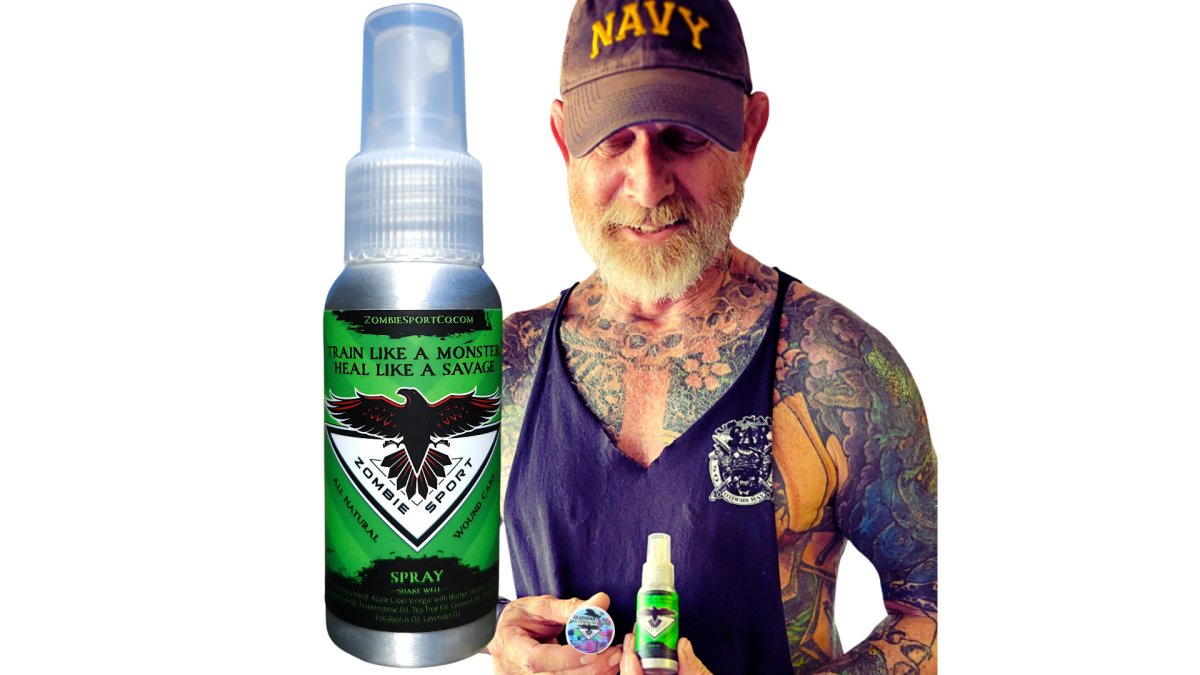
A scrape does not wait until you are near a sink. The gap between the skin break and access to washing is when bacteria get their opening. Keep Regenerate RX or NutriCore Vital in your gym bag so treatment happens in the minute after the wound, not the hour after.
This is also where the Zombie name earns its place. The products are designed to help athletes fight staph and other bacteria in real time, even mid-training, so an athlete treats the wound on the spot and stays in the game instead of sitting out a week.
Key Takeaway
The first two hours decide the next two weeks. Grade the wound, cool it with clean running water, apply an all-natural antimicrobial treatment, and cover it with a non-stick breathable dressing. Deep wounds with embedded debris or bleeding that will not stop belong in front of a medical professional, and that choice is always yours to make.
Early Signs of Staph Infection on Skin
Staph infections can develop quickly on open wounds. Know the warning signs.
Increased redness and warmth. The skin around the wound grows redder and feels warm, signaling inflammation and bacterial growth.
Swelling that gets worse. Some swelling is normal. Infection swelling increases over hours or days, not improves.
Pus or oozing. Yellow, green, or cloudy discharge means bacteria are multiplying.
Pain that worsens. A mat burn hurts. Infection pain intensifies and doesn't improve with rest.
Red streaks spreading from the wound. This is a serious sign.
If you notice any of these signs, increase your antimicrobial care.
All-Natural Regenerate RX Protect and Restore Balm →
What you feel is best for yourself and your family matters most.
Mat Burn Healing Time: What to Expect
Healing time depends on the burn's depth and how well you care for it.
Light abrasions (surface skin only) heal in 3 to 7 days. Keep them clean and covered, and they close quickly.
Moderate friction burns (reaching into the dermis) take 1 to 2 weeks of consistent care and protection from friction.
Deep abrasions (severe friction that strips multiple layers) can take 3 to 4 weeks or longer. These wounds demand careful daily care and close monitoring for infection signs.
Consistent antimicrobial care can support healing.
Your body does the healing. Your job is to protect the wound from bacteria and keep it moist, and you'll see steady progress.
When to Return to Grappling and Training
Returning to training too soon reopens your wound and resets the healing clock.
Light abrasions: Wait 3 to 5 days before returning to grappling so the wound can form a protective layer.
Moderate burns: Take 1 to 2 weeks off hard training.
Deep abrasions: Rest for 2 to 3 weeks before returning to full training so the deeper layers can rebuild.
When you do return, protect the area. Wear a rash guard or long sleeves if possible. Cover the wound with a breathable dressing.
Your training partners benefit too. A covered, protected wound prevents you from spreading bacteria to others. That's the real team defense.
Preventing Mat Burns and Abrasions
The best mat burn is the one you never get. Competitors tell you to wear a rash guard and shower. That is the floor, not the system. Prevention in grappling comes down to four levers: the mat surface, what you wear, how you prepare your skin, and how you check yourself after every session. Run all four and you cut your abrasion risk dramatically.
Lever 1: Mat Hygiene and Surface Condition
Friction burns come from skin sliding across a surface, and a dirty, worn, or dry mat makes both problems worse. Rough, cracked, or seam-heavy mats grab skin and tear it. Mats that are not cleaned between sessions carry staph and ringworm fungi straight into the fresh wound.
- Wipe down before and after. Many gyms clean on a schedule; the athletes who stay healthy wipe their own training area before and after use.
- Flag worn mats. If seams are lifting, vinyl is cracked, or patches are rough, tell management. A deteriorating mat is a friction-burn factory for the whole room.
- Never train barefoot on a questionable surface. Feet and toes take the worst friction burns because there is no fabric between skin and mat.
Lever 2: What You Wear
Clothing does not eliminate friction, but it moves the contact from skin to fabric.
- Rash guards and spats cover forearms, knees, and shins, the highest-friction zones in takedowns and ground work.
- Long sleeves over short when you know the session will be heavy on scrambles and mat slides.
- Check seams and tags. A rough seam or a scratchy tag against skin creates a hot spot that becomes an abrasion over a long round.
- Keep gear clean. A rash guard worn two sessions in a row can become a bacteria carrier pressed against your skin.
Lever 3: Prepare the Skin Before You Step On
Strong, conditioned skin resists friction better than dry, cracked skin. This is the lever most athletes ignore.
- Build a daily skin routine. Mix Infusion Hygienic Concentrate into a water-based skin spray, body wash, liquid soap, or lotion at the recommended ratio of ⅛ fl oz per 8 fl oz of base. The prepared skin spray goes in your gym bag and becomes part of your before-and-after training routine.
- Spray before the mats. A prepared Infusion spray applied before you step on puts care within reach before the first scramble, not after the first scrape.
- Moisturize after you wash. Post-training lotion with Infusion mixed in keeps skin supple so it bends instead of tearing.
- Stay hydrated. Dehydrated skin is less resilient and tears more easily under friction.
Lever 4: The Post-Session Skin Check
Most mat burns that turn into infections were small wounds nobody looked at until the next day. Build a two-minute check into your routine.

- Scan in the shower. Look at feet, toes, knees, elbows, forearms, and any spot that felt hot during training.
- Treat anything broken immediately. A light scrape treated the moment you find it is a light scrape tomorrow. One ignored until morning is a head start for bacteria.
- Wash with antimicrobial soap. A post-training wash with Infusion mixed into your body wash removes sweat and surface bacteria before they settle into a wound.
- Check your gear and your bag. A damp rash guard left in a gym bag is a breeding ground. Wash gear after every session.
The Prevention Mindset
Prevention is not one habit; it is a routine that runs before, during, and after training. The athletes who train consistently are the ones who treat skin care as part of preparation, not an afterthought. Zombie is powerful, built for athletes, and strong enough that anyone can use it every day, which is exactly what a prevention routine requires: something you will actually do every session.
Pro Tip
Keep a prepared Infusion skin spray and a tin of Regenerate RX in your gym bag. Spray before the mats, balm anything that breaks during training, and you have closed the gap between the wound and the wash.
Prevention is not foolproof, and no routine stops every scrape. But consistent attention to the mat, your gear, your skin, and your post-session check cuts your abrasion risk sharply and keeps you on the mat instead of on the sideline.
Frequently Asked Questions
How do you heal a mat burn quickly?
Clean the wound immediately with cool running water, then apply an all-natural topical treatment formulated for skin abrasions. Keep the wound moist with a non-stick dressing and change it daily. Most mat burns show visible improvement within 3-5 days with consistent care, though complete healing takes longer depending on severity. Using products with antimicrobial properties can help prevent infection, which can slow healing.
What are the early signs of a staph infection on skin?
Watch for increasing redness, warmth, and swelling around the wound. Pus or oozing that worsens after the first 24 hours, red streaks extending from the abrasion, or swollen lymph nodes near the injury are warning signs. Fever or body aches alongside skin symptoms also indicate infection. If you notice these early signs of staph infection on skin, seek medical attention and consider what you feel is best for your health.
Should you cover a mat burn or let it air out?
Cover mat burns with a breathable, non-stick dressing after cleaning and applying topical care. Moist wound care (keeping the wound covered with the right dressing) speeds healing compared to air-drying. Change the dressing daily or when it becomes soiled. A breathable dressing allows air circulation while protecting the wound from friction and contamination during training.
How long does a mat burn take to heal?
Mild mat burns typically show significant improvement in 3-5 days and can heal completely in 1-2 weeks. Deeper abrasions may take 2-4 weeks to close fully. Healing time depends on wound depth, cleanliness, and how well you prevent infection. Using antimicrobial topical care and keeping the wound moist with proper dressing can help reduce mat burn healing time and lower infection risk.