
Ringworm Treatment That Works Fast: What to Expect
Editorial Team
Table of Contents
- Ringworm Treatment That Works Fast: What Fast Actually Means
- Ringworm Symptoms and Appearance: Confirming It Before You Treat
- How Long Does Ringworm Take to Heal? A Week-by-Week Timeline
- Choosing an Antifungal by Body Site: Scalp, Feet, Groin, and Skin
- How to Stop Ringworm Spreading at Home, in the Gym, and From Pets
- When to See a Doctor for Ringworm (and What to Do If Treatment Fails)
- All-Natural Skin Care That Supports Fast Ringworm Recovery
- Conclusion: Staying in the Game While Ringworm Heals
- Frequently Asked Questions
Last Updated: October 16, 2026
Ringworm Treatment That Works Fast: What Fast Actually Means
Ringworm treatment that works fast starts with one honest fact: no product clears a fungal infection overnight. Most topical antifungals need consistent daily use, and visible improvement usually shows up within the first week. At Zombie Sport Co, we work with combat athletes who cannot afford to sit out, so we built our approach around that reality.
Ringworm is a contagious fungal infection of the skin, not a worm. It spreads through direct skin contact and shared surfaces. The Centers for Disease Control and Prevention tracks it as a common infection in contact sports, and the CDC guidance on ringworm and tinea infections confirms it spreads easily in locker rooms and on mats.
"Fast" does not mean one application. It means the infection stops spreading, the itching calms, and the border starts to fade on a predictable schedule.
We will walk you through what that schedule looks like, how to pick the right treatment for each body site, and how to keep ringworm off your training partners.
Key Takeaway
Fast ringworm treatment means consistent daily application, not a single dose. Expect the first real signs of improvement within 3 to 7 days of steady use.
Ringworm Symptoms and Appearance: Confirming It Before You Treat
Ringworm symptoms and appearance are usually easy to spot: a red, circular rash with a raised border and clearer skin in the middle. The edges often look scaly, and the area itches.
That classic ring shape is why people call it ringworm, but not every case forms a perfect circle. On the feet, it looks like peeling, cracked skin between the toes; in the groin, an itchy red patch; on the scalp, flaky patches with hair loss.
Look-alike rashes cause real problems here. Eczema, psoriasis, and contact dermatitis can all mimic a fungal infection. Treating the wrong rash wastes weeks.
Check these signs:
- Raised, scaly border that keeps expanding
- Clear or lighter center
- Itching that gets worse after sweating
- New rings appearing nearby
If the rash does not match this pattern, get a medical opinion before you start an antifungal.
How Long Does Ringworm Take to Heal? A Week-by-Week Timeline
How long ringworm takes to heal depends on where the infection sits, which treatment you use, and how faithfully you apply it.
Here is what that schedule looks like, and what each stage tells you about whether treatment is working.
| Timeframe | What You Should See | What It Means |
|---|---|---|
| Days 1-3 | Itching calms, no new rings appear | The fungus is no longer actively spreading outward |
| Days 4-7 | Border flattens, redness fades at the edges | The active edge is retreating |
| Weeks 2-3 | Rash fades, scaling drops off | Surface skin is repairing |
| Weeks 3-4 | Skin looks normal, treatment continues | Fungus can still be present below the surface |
That last row matters most. The rash can look gone while fungus is still active in the skin, and stopping early is the number one cause of a rash that comes right back, the second round often takes longer to clear.
Why the timeline varies by body site. Skin on the torso and arms is thin and absorbs topical products well, so body ringworm tends to respond on the faster end of that range. Feet are thicker and often moist, which slows down healing.
What "fast" realistically means. Expect itching to ease within the first few days and the active border to flatten within the first week.
When lack of progress warrants reassessment. Contact a clinician if:
- The rash is larger after a full week of daily use
- New rings keep appearing while you are treating
- The area becomes painful, hot, or starts to ooze
- You finish a full course and the rash returns within days
These signals point to missed applications, reinfection from a surface or pet, a look-alike rash that was never ringworm, or a strain needing prescription-strength treatment.
Watch Out
Stopping treatment the moment the rash looks clear is the most common mistake we see. The infection often returns within days, and the second round takes longer to clear.
Pro Tip
Take a photo of the rash on day one and again on day seven. Comparing the two is the fastest way to know whether your treatment is actually working, and it gives a clinician a clear record if you need one.
While you treat, keep the skin clean and dry, and give it the same real-time care you would give any break in the skin. That is where our line fits: Regenerate RX and NutriCore Vital were formulated with ringworm-causing fungi in mind, alongside care for damaged skin, so the skin around the infection stays calm while your treatment does its job.
Choosing an Antifungal by Body Site: Scalp, Feet, Groin, and Skin
Choosing an antifungal by body site is the step most people rush, and it decides whether treatment works fast or drags on for weeks.
Over-the-counter options include creams, ointments, lotions, powders, and sprays. Common active ingredients are terbinafine, clotrimazole, miconazole, and tolnaftate.
Body and groin skin. A topical cream or spray with terbinafine or clotrimazole is the usual starting point.
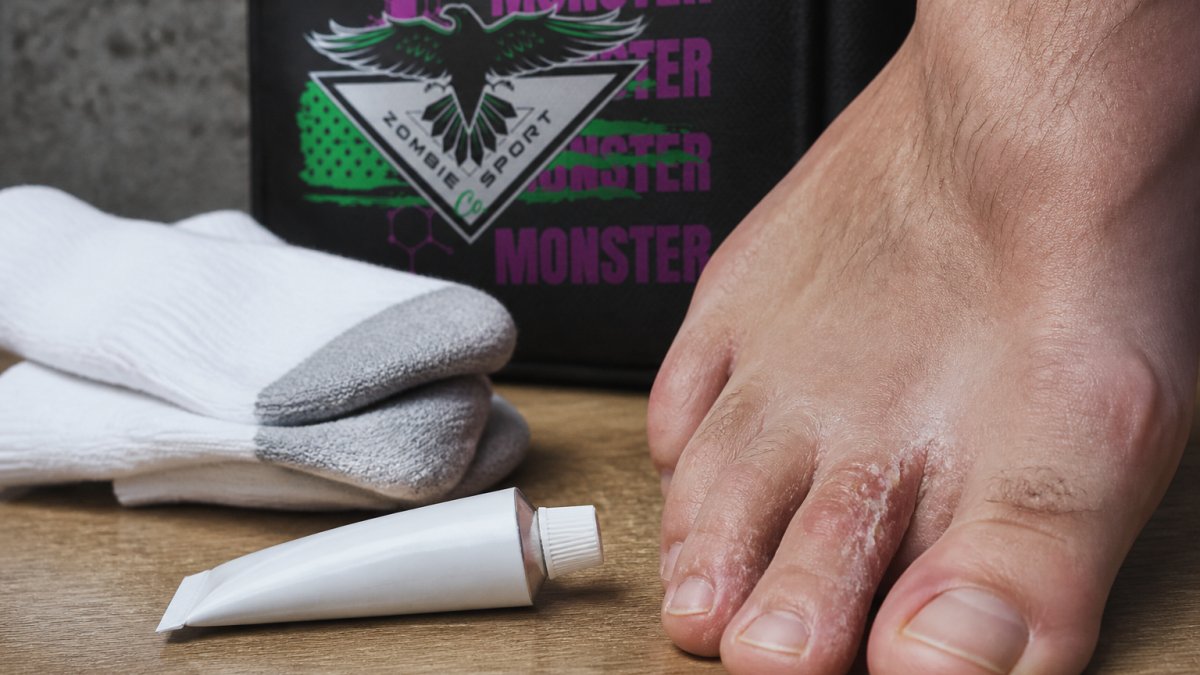
Feet (tinea pedis). Feet need a cream or powder applied between the toes and across the sole, not just on the visible patch.
Beard area (tinea barbae). This one is easy to mistake for razor bumps or folliculitis.
Scalp (tinea capitis). Over-the-counter creams rarely reach the fungus in the hair follicle.
Nails (tinea unguium). Nail infections sit under the nail plate, where topical products penetrate poorly. They typically need prescription treatment and take months, not weeks, to resolve.
A simple decision rule. Body, groin, or feet: an over-the-counter topical is a reasonable first step. Scalp, beard, nails, or a large area: start with a clinician.
A practical note for athletes. Sprays and no-touch formats have a real edge when skin is raw or tender, because you can treat the area without rubbing it.
Key Takeaway
Match the treatment to the site: body, groin, and feet can often start with an over-the-counter topical; scalp, beard, and nails should start with a clinician.
How to Stop Ringworm Spreading at Home, in the Gym, and From Pets
How to stop ringworm spreading comes down to three fronts: your home, your gym, and your pets. The fungus survives on surfaces and fabrics, so treating your skin alone is not enough.
At home, wash bedding, towels, and training gear in hot water. Do not share towels. At the gym, never step onto shared mats barefoot, and clean your gear after every session. Pets can carry ringworm too, so a patchy bald spot on a dog or cat needs a vet visit.
The American Academy of Dermatology guidance on ringworm notes that the infection spreads through skin-to-skin contact and shared items, which is why hygiene habits matter as much as treatment.
- Shower right after training
- Wear clean training gear every session
- Keep nails short to avoid scratching and spreading
- Wash your hands after touching a pet's rash
When to See a Doctor for Ringworm (and What to Do If Treatment Fails)
When to see a doctor for ringworm depends on how your skin responds. If the rash is not improving after two weeks of daily antifungal use, get medical care.
Watch for these signals:
- The rash grows larger after a week of treatment
- The area becomes painful, hot, or oozes
- New patches keep appearing
- The infection is on the scalp, face, or nails
Self-treatment fails for a few reasons: missed applications, stopping too early, or a rash that was never ringworm at all. A doctor can confirm the diagnosis and, if needed, prescribe a stronger topical or oral medication.
If treatment fails, do not double up on products. Clean the area, keep it dry, and get it looked at.
All-Natural Skin Care That Supports Fast Ringworm Recovery
All-natural skin care supports recovery by keeping the skin clean, calm, and protected while treatment does its job. This is where we built our line, and it is why the name Zombie fits.
Athletes fight skin infections in real time, often mid-training, and our products are made for that exact moment. The moment skin breaks, our formulas cool the wound, clean it, calm irritation, and support the skin's own repair process.
Our full line, sold together as the Zombie Defense Collection, includes:
- Regenerate RX: an all-natural balm with conditioning oils, shea butter, and beeswax, made for damaged skin
- NutriCore Vital: a no-touch wound-care spray for tender areas
- Infusion Hygienic Concentrate: a mix-in concentrate for your body wash, soap, or lotion
- Zombie Lips: everyday lip care with cold-sore support
- AniSport Pet Balm and Spray: for pets, including service dogs and police K9s
The complete formula was independently lab tested by Twin Arbor Analytical for heavy metals and microbial safety and came back clean. That testing does not prove any medical claim, but it does tell you what is in the tin. We are backed by Team Monster and Team Little Monsters, real combat athletes plus military veterans and first responders.
Regenerate RX and NutriCore Vital were formulated with ringworm-causing fungi in mind, alongside care for damaged skin. Clean the area as soon as you can, then follow the product directions. A little goes a long way.
Conclusion: Staying in the Game While Ringworm Heals
Ringworm does not have to end your season. Treat it daily, keep the area clean and dry, and watch the timeline instead of guessing. If it is not improving in two weeks, get medical care.
At Zombie Sport Co, we built our all-natural line for athletes who cannot afford time off the mats. Regenerate RX, NutriCore Vital, and the rest of the Zombie Defense Collection give you real-time skin care for the moments between a skin break and a sink.
Get started with Zombie Sport Co and keep training while your skin heals.
Frequently Asked Questions
What kills ringworm as fast as possible?
Over-the-counter antifungal creams containing terbinafine, clotrimazole, miconazole, or tolnaftate are the standard first step for most skin ringworm. Terbinafine often shows improvement within about a week of daily use. No product clears ringworm in a day or two, because the fungus lives in the skin layers and takes time to die off. Apply as directed, keep the area clean and dry, and continue the full treatment course even after the rash fades.
Can ringworm go away in 2 days?
No. Ringworm is a fungal infection, not a surface irritation, so it does not clear in two days. With a topical antifungal, itching and redness usually start easing within several days to a week, but the rash itself can take two to four weeks to fully resolve. Stopping treatment the moment it looks better is the most common reason ringworm comes back.
Can you keep training while you have ringworm?
Many athletes train while treating ringworm, but only if the lesion is covered and you follow gym hygiene rules. Cover the area with a clean bandage, shower immediately after practice, and never share towels, gear, or razors. If the rash is oozing, spreading, or on a spot that contacts mats directly, sit out until it is dry and improving. Check with your gym and a healthcare professional about their policy.
How can athletes keep ringworm from spreading to teammates?
Wipe down mats before and after use, wear sandals in locker rooms and showers, and never share towels or clothing. Wash your gear and towels in hot water after every session, and keep the lesion covered during training. A no-touch skin spray makes it easy to care for skin before stepping onto the mats and right after training, which limits the window when the fungus can move to shared surfaces and training partners.
When should you see a healthcare professional for ringworm?
See a doctor if the rash is on your scalp or nails, if it spreads or worsens after two weeks of consistent over-the-counter treatment, or if you notice pus, swelling, or fever. Scalp ringworm needs oral prescription medication because topical creams cannot reach the hair follicle. A healthcare professional can also confirm the diagnosis and rule out look-alike rashes such as eczema or psoriasis.