
Prevent Staph in BJJ: Complete Defense With Regenerate RX
Editorial Team
Table of Contents
- How Staph Spreads in BJJ: Understanding the Risk
- BJJ Hygiene Tips: Your Personal Defense System
- How to Clean a BJJ Gi After Training
- Mat Sanitation and Gym-Level Prevention
- Staph Infection Symptoms in Athletes: What to Watch For
- When to Return to BJJ After a Staph Infection
- What to Do After Suspected Exposure or Recurring Infections
- Frequently Asked Questions
Last Updated: October 21, 2026
How Staph Spreads in BJJ: Understanding the Risk
Staphylococcus aureus causes most skin infections in grappling sports. It lives on skin naturally but becomes dangerous when it enters broken skin or spreads through close contact.
The risk isn't theoretical: regular training means genuine exposure.
At Zombie Sport Co, we've built all-natural formulas targeting the exact threats grappling athletes face. But prevention starts with knowledge, not just products.

Key Takeaway
Staph spreads through skin-to-skin contact and contaminated surfaces. BJJ creates ideal conditions for transmission because of close grappling, shared mats, and frequent skin breaks.
BJJ Hygiene Tips: Your Personal Defense System
Your personal hygiene routine is your first barrier. The difference between athletes who get infections and those who don't often comes down to consistency.
Shower Before and After Training
Shower immediately after training. Sweat mixed with bacteria creates a breeding ground, and warm water and soap remove surface pathogens before they penetrate skin. A quick shower before training removes bacteria already on your skin, reducing what you bring to the mat and what you pick up from partners.
The timing matters:
- Shower within 30 minutes after training ends
- Use warm water and regular soap
- Pay special attention to areas where skin breaks exist
Dry completely with a clean towel afterward. Moisture allows bacteria to survive longer on skin.
Wash Your Hands and Maintain Personal Hygiene
Your hands touch your face, eyes, mouth, the mat, your gi, and training partners constantly. Hand hygiene breaks the transmission chain.
Wash hands:
- Before training
- After training
- Before eating
Use soap and warm water and scrub for at least 20 seconds (the CDC). Keep fingernails short and clean, since bacteria hide under long nails and transfer directly into skin when you scratch or grapple.
Cover Cuts, Scrapes, and Abrasions
Open wounds are infection highways. Any break in skin, even a small one, needs protection.
Cover all cuts before training:
- Use waterproof bandages
- Tape over the bandage if it's in a high-contact area
- Change bandages if they get wet or dirty
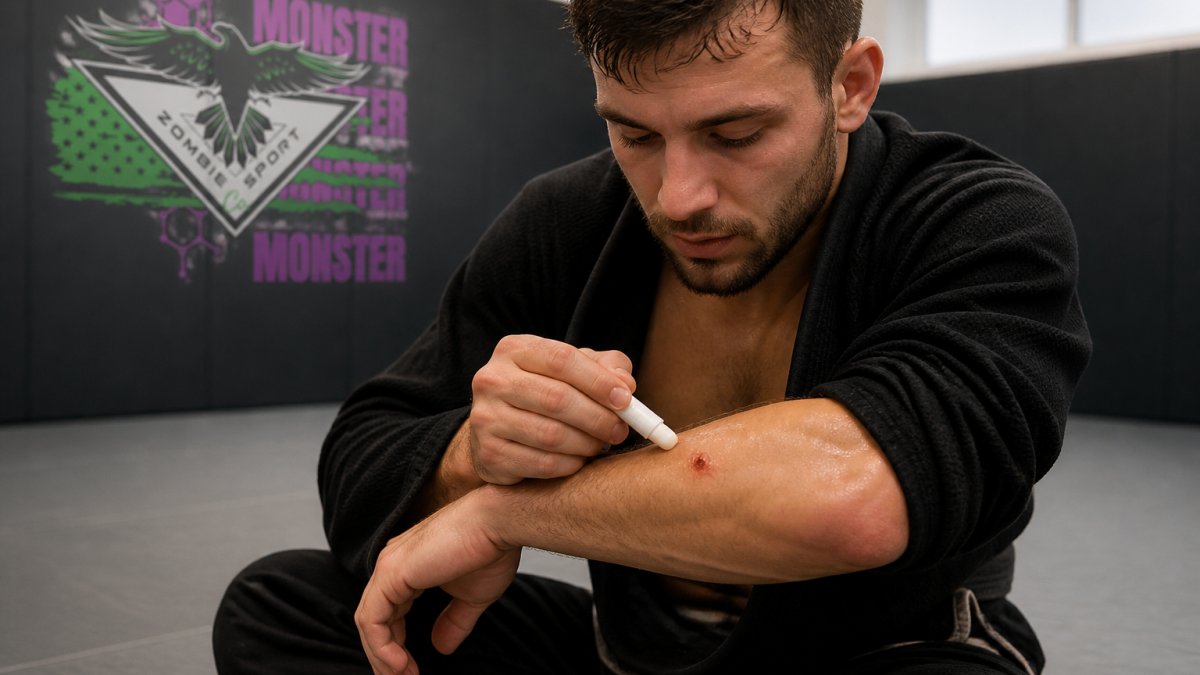
If you get a cut during training, stop. Clean it immediately. Apply topical protection like Regenerate RX Protect and Restore Balm. This all-natural balm combines apple cider vinegar with the mother and tea tree oil to fight bacterial threats while supporting skin repair.

Watch Out
Training with open wounds dramatically increases infection risk, both for you and your training partners. One unprotected cut can expose you to staph, MRSA, ringworm, and HSV-1. Stop training, clean the wound, and protect it before returning to the mat.
How to Clean a BJJ Gi After Training
Your gi is a bacteria collector. Sweat, skin cells, and environmental pathogens soak into the fabric. Washing it properly stops bacteria from multiplying.
Laundering Your Gi Properly
Wash your gi after every training session. Don't let it sit in a gym bag, where damp fabric and warm temperatures create ideal conditions for bacterial growth.
Proper gi washing:
- Rinse with cold water first to remove excess sweat
- Wash in hot water with regular detergent
- Use a full wash cycle, not a quick rinse
Hot water kills more bacteria than cold water. Dry your gi completely, and hang it in sunlight if possible, since UV light naturally kills pathogens.
Cleaning Rash Guards and Training Clothes
Rash guards trap sweat against skin and need the same treatment as your gi.
Wash after every training:
- Use hot water
- Include them in your regular laundry
- Don't mix with non-training clothes if possible
Compression shorts, spats, and other gear follow the same rules. If you train multiple times per week, rotate enough gear so you never wear damp clothing to your next session.
Pro Tip
Add your gi and training clothes to a mesh laundry bag. This protects them during washing and makes it harder to forget a piece. Throw the whole bag in the wash after training.
Mat Sanitation and Gym-Level Prevention
Individual hygiene protects you. Mat sanitation protects everyone. The difference between a gym with recurring skin infections and one without usually comes down to whether someone owns the checklist.
Cleaning vs. Disinfecting: Know the Difference
These are not the same step, and skipping one leaves protection on the table.
- Cleaning physically removes sweat, skin cells, blood, and visible soil. Soap or detergent plus mechanical friction does this. Cleaning alone does not kill staph, ringworm spores, or HSV-1.
- Disinfecting kills pathogens on a surface after it has been cleaned. Disinfectants work poorly on top of organic soil, which is why cleaning comes first.
Read the product label and follow it exactly. Two details matter more than brand:
- Contact time (dwell time). Every EPA-registered disinfectant lists how long the surface must stay visibly wet to achieve its kill claim (the EPA). Wiping a mat dry immediately after spraying defeats the purpose. Spray, walk away, then wipe with a clean towel after the labeled contact time.
- Dilution ratio. Concentrates must be mixed at the label ratio. Over-concentrated solutions leave residue that damages mat vinyl and irritates skin, while under-diluted solutions fail to hit the kill claim.
For blood or bodily fluid spills, follow the facility's bloodborne-pathogen protocol: gloves, absorbent material, a freshly mixed disinfectant at the labeled contact time, and proper disposal.
A Repeatable Gym-Level Checklist
Most skin-infection advice stops at "clean the mats." A checklist makes it enforceable. Coaches and gym owners can adapt this:
Daily
- Sweep or vacuum loose debris before any wet cleaning.
- Clean all mat surfaces with detergent and water, paying attention to seams, edges, and wall padding where sweat pools.
- Disinfect with a labeled product at the correct dilution and full contact time.
Weekly
- Deep-clean seams, mat edges, and the undersides of portable mats.
- Inspect mats for tears, cracks, and exposed foam; damaged surfaces trap moisture and resist disinfection.
- Check disinfectant stock and dilution equipment; expired or incorrectly mixed product is a silent failure.
Policy-level
All-Natural Regenerate RX Protect and Restore Balm →
- Post a written skin-infection policy at the front desk and in the changing area.
- Require athletes to cover all open wounds with a waterproof barrier before stepping on the mat.
- Require shoes off the mat and clean feet on the mat; provide a foot-wipe station or designated footwear zone.
Build the Culture, Not Just the Log
A checklist only works if athletes trust it. Gyms that normalize reporting catch outbreaks earlier. Simple habits help: bring your own towel, wipe down shared equipment after use, and speak up when a mat looks or smells unclean.
Some gyms add an all-natural concentrate such as Zombie Sport Co's Infusion Hygienic Concentrate to their existing cleaning routine. It mixes into water or a compatible cleaning solution to support antimicrobial protection.
Key Takeaway
Mat sanitation is a process, not a product. Clean first, disinfect at the labeled contact time, log it, and give athletes a safe way to report skin problems. That combination is what actually reduces infections gym-wide.
Staph Infection Symptoms in Athletes: What to Watch For
Knowing the signs of infection means catching it early, before serious complications develop.
Watch for these signs:
- Red, swollen bump or pustule on skin
- Warmth around the affected area
- Pus or drainage
These symptoms typically appear within 2-10 days after exposure. Don't assume a skin irritation is just a mat burn or friction rash.
Distinguishing Staph From Ringworm, Herpes, and Mat Burn
Different infections require different responses.
Ringworm (fungal infection) creates a circular, scaly patch.
Herpes simplex (HSV-1) shows as clusters of painful blisters, often on the face, neck, or hands, and is extremely contagious through skin contact.
Mat burn is friction damage without infection: raw, red skin without the swelling, pus, or systemic symptoms of a bacterial or viral infection.
When in doubt, stop training and see a healthcare provider, who can distinguish between these conditions and recommend treatment.
Watch Out
Herpes and ringworm are highly contagious in BJJ environments. If you suspect either, do not train until a healthcare provider confirms it's safe. Continuing to train risks infecting your entire gym.
When to Return to BJJ After a Staph Infection
Returning too early spreads infection to training partners and can prolong your own recovery. When in doubt, let a clinician make the call.
Return Decisions Depend on Diagnosis and Treatment
"Staph" is a label people apply to many skin problems. A red bump could be a staph infection, a mat burn, ringworm, HSV-1, or something else. The return timeline depends on which one it actually is and what treatment was prescribed.
- If a clinician diagnosed a bacterial infection and prescribed antibiotics, complete the full course even if symptoms disappear early. Stopping early lets resistant bacteria survive and can lead to recurrence.
- If the lesion was never assessed, do not assume it is minor. Get it looked at before returning to contact training.
- If the diagnosis was fungal (ringworm) or viral (HSV-1), return criteria differ from bacterial infections. Follow the clinician's guidance and any applicable gym or sports-organization rules.
Practical Return Criteria
Use these as a conservative baseline, not a substitute for medical advice:
- The infection has stopped draining.
- Any open areas are completely closed and the skin is intact.
- No fever for at least 24 hours without fever-reducing medication.
Even after these criteria are met, ease back in. Start with light drilling and avoid intense live grappling for at least a week. Friction and sustained pressure can reopen healing skin.
Watch the Area During Your First Weeks Back
Check the site after every session. Renewed redness, swelling, warmth, pain, or drainage means stop training and contact your clinician again. A recurrence signals that treatment was incomplete or that something in your routine, gear, or gym environment needs attention.
Coordinate With Your Gym
Tell your coach or gym owner when you have been cleared to return, without oversharing medical details. Many gyms have a written policy on skin infections; follow it. If your gym has no policy, ask what they would like you to do.
Watch Out
Do not train through a suspected infection to "see if it clears up." Bacterial, fungal, and viral skin infections can all worsen with continued friction and sweat, and all three can spread to your gym. Get assessed, follow treatment, and return only when cleared.
What to Do After Suspected Exposure or Recurring Infections
One exposure doesn't guarantee infection, but it requires immediate action.
After suspected exposure:
- Clean the area thoroughly with soap and water
- Apply topical protection like NutriCore Vital Recovery Spray, our no-touch spray delivery targets staph and MRSA threats while supporting skin repair
- Watch for symptoms over the next 10 days
For recurring infections:

Evaluate:
- Are you showering immediately after training?
- Is your gi being washed after every session?
- Are you covering all cuts before training?
Recurring infections often point to a specific gap. Address it systematically.
Consider adding Regenerate RX to your daily routine, not just after injuries.
If infections persist despite solid hygiene, consult a healthcare provider.
Pro Tip
Keep a training log noting any skin issues, when they appeared, and what you were doing when exposed. Patterns emerge quickly. This log also helps your healthcare provider understand your infection history.
Preventing staph in BJJ comes down to consistency. Shower after training. Wash your gi.
Zombie Sport Co builds products designed specifically for combat athletes facing these threats. Third-party laboratory certified and trusted by UFC veterans and Karate Combat champions, our products work alongside your hygiene routine to keep you training without interruption. Add Regenerate RX to your training kit and train with confidence.
Frequently Asked Questions
How can you prevent getting a staph infection in BJJ?
Prevent staph in BJJ through consistent hygiene: shower before and after training, launder your gi and rash guard after every session, cover all cuts and abrasions with waterproof bandages, wash hands frequently, and keep training mats clean and disinfected. Use targeted topical care like Regenerate RX on any skin breaks to fight bacterial threats at the source. Avoid training with open wounds or suspected infections, and ensure your gym maintains regular mat sanitation protocols.
How should you clean BJJ gear to help prevent staph?
Wash your gi in hot water with detergent after every training session, then dry it completely. Rash guards and training clothes should be laundered separately in hot water immediately after use. Do not leave damp gear in a bag. Towels used during training should be washed in hot water and dried fully before reuse. Allow all equipment to air-dry completely before storing to prevent bacterial growth in moist environments.
What are staph infection symptoms in athletes, and how do they differ from ringworm or mat burn?
Staph typically appears as a painful, swollen bump with pus, redness, and warmth at the site. Ringworm shows as an itchy, circular rash with a raised border and clear center. Herpes presents as fluid-filled blisters that are extremely painful. Mat burn is a friction-based abrasion with redness but no pus or systemic symptoms. Staph infections can spread quickly and may cause systemic symptoms like fever. If you notice a suspicious lesion after training, stop training immediately and seek medical evaluation.
When should you return to BJJ after a staph infection?
Return to BJJ only after a medical professional confirms the infection has cleared, typically when lesions have fully healed and any prescribed antibiotics are complete. Do not return to training while lesions are draining, open, or covered only with a bandage. Even after clearance, introduce training gradually and ensure all wounds are fully closed. Inform your gym of the infection so they can increase sanitation protocols. Use preventative topical care like Regenerate RX consistently when you resume training.