
Choosing a Recovery Kit for Combat Sports: Regenerate RX
Editorial Team
Last Updated: November 7, 2026
Quick Summary
A complete recovery kit for combat sports covers four categories: skin defense, muscle recovery, mobility work, and minor injury supplies. Build skin defense first, since skin infections can end training camps, then add fighter recovery tools like a foam roller, massage gun, and compression gear.
- A 2026 PubMed scoping review confirms fighters use a mix of recovery methods with widely varying evidence.
- Many athletes buy muscle gear first and skin defense last, but that order is worth reversing.
- Percussion devices and rollers do nothing for broken skin, so treat them as muscle tools only.
- Every tin of our conditioning balm contains acetic acid, so each application cleans the wound as it goes on.
- The Regenerate RX + NutriCore Vital Recovery Kit pairs the 0.50 oz balm with the 3 oz spray.
What belongs in a fighter's recovery kit?All-natural balms and no-touch sprays built for combat sports skin defense.
Shop the Recovery Kit
Table of Contents
- Combat Sports Recovery Kit Essentials: What Earns Its Place in the Bag
- Fighter Recovery Tools: Foam Rollers, Massage Guns, and Compression Gear
- The Grappler First-Aid Kit: Minor Injuries and Skin Defense in Shared Spaces
- Frequently Asked Questions
Combat Sports Recovery Kit Essentials: What Earns Its Place in the Bag
Choosing a recovery kit for combat sports comes down to three jobs: managing muscle soreness, restoring range of motion, and defending broken skin in shared spaces. Choosing a recovery kit for combat sports means planning for that third job too, because a staph infection can cost more training time than any sore shoulder. Once skin is protected and soreness is under control, supplements for muscle recovery can be part of a broader plan to restore training readiness.
A 2026 scoping review in PubMed's review of postexercise recovery methods for combat sports confirms that fighters use a mix of recovery methods, but the evidence behind each one varies widely. That matters when you are spending money on gear.
Here is the short version: a complete recovery kit covers four categories.
| Category | What It Does | Priority |
|---|---|---|
| Skin defense | Cleans and protects broken skin | Highest |
| Muscle recovery | Foam roller, massage gun, compression | High |
| Mobility work | Restores range of motion | High |
| Minor injury supplies | Tape, wraps, cold packs | Situational |
Many athletes buy the muscle gear first and the skin defense last. Skin infections can end training camps, so it is worth considering that order.
Fighter Recovery Tools: Foam Rollers, Massage Guns, and Compression Gear
Fighter recovery tools are the hardware side of the kit: foam rollers, massage guns, and compression gear form the standard lineup.
Foam roller. Best for self-myofascial release across large muscle groups like quads, lats, and calves. Cheap, durable, no charging required.
Massage gun. Best for targeted percussion on muscle tension and localized soreness; the drawback is weight and battery life.
Compression gear. Sleeves and garments support circulation during and after training; recovery boots rarely justify the price for recreational athletes.
Recovery spray. A no-touch option belongs here too. Our All-Natural NutriCore Vital Recovery Spray is a no-touch wound-care spray that applies care to open, painful areas without spreading balm by hand.

Watch out: percussion devices and rollers do nothing for broken skin. Treat them as muscle tools only.
The Grappler First-Aid Kit: Minor Injuries and Skin Defense in Shared Spaces
A grappler first-aid kit is the part of your recovery kit that protects you from everyone else on the mat. Mats are shared surfaces, and skin health is the outcome of what you do before and after every roll.
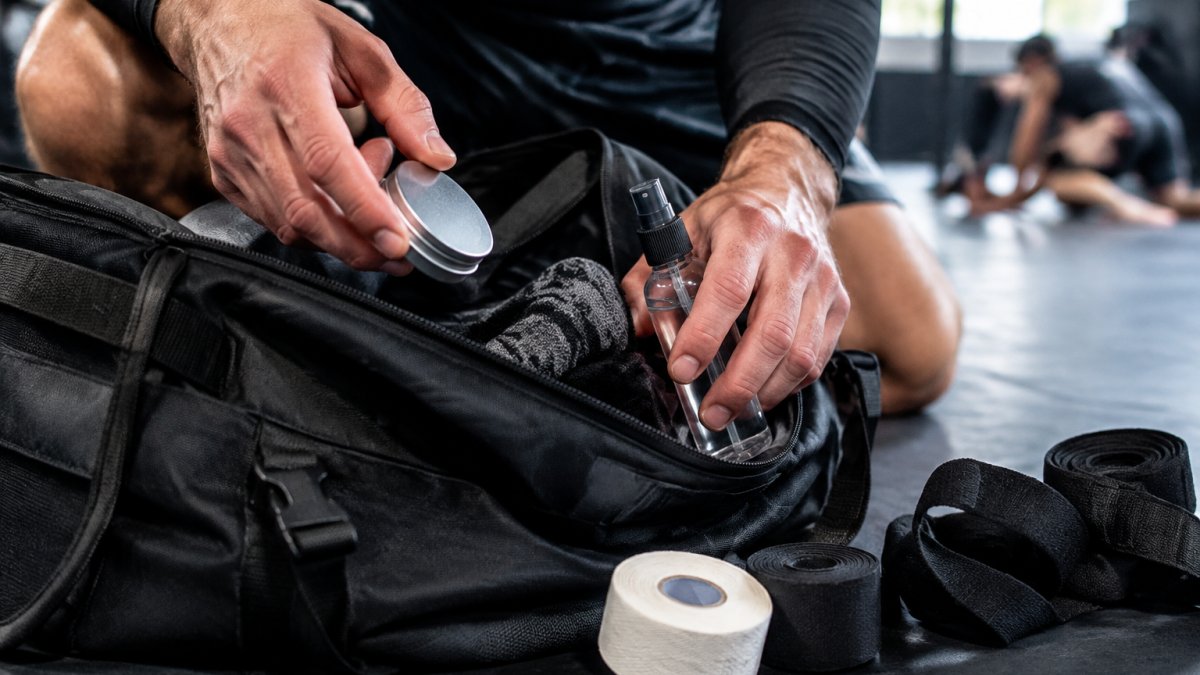
Build this tier first:
- Finger tape and athletic tape for joint support and mat burns
- Nasal plugs for wrestling and no-gi scrambles
- A cold pack for acute knocks
- A conditioning balm and no-touch wound spray for damaged skin
Our key difference sits in the tin. Every tin contains acetic acid, so each application cleans the wound as it goes on. That built-in cleaning matters most when the product is the only option you have. Rinsing with clean water when it is at hand is fine, but it is not the step the product depends on.
For the science behind the formula, read how tea tree oil supports damaged skin and eucalyptus's role in cooling tender skin. If your skin reacts easily, this guide on how to choose a wound spray for reactive skin walks through the selection criteria.
Fighters who want the balm and spray together should look at the Regenerate RX + NutriCore Vital Recovery Kit, which pairs the 0.50 oz balm with the 3 oz spray.

Skin defense is the part of recovery most athletes skip until an infection forces a layoff. Build the kit so the cleaning step is already in the product, not a separate chore you have to remember. Zombie Sport Co makes that easy with a compact balm and a no-touch spray that travel together, plus free shipping on topical products. Get started with Zombie Sport Co and keep your care within reach from the mat to the gym bag.
Frequently Asked Questions
What should be in a recovery kit for combat sports?
A practical kit covers two jobs: tissue recovery and skin defense. On the tissue side, a foam roller, massage gun, and compression sleeves handle muscle soreness and circulation. On the skin side, you need minor-wound care for the cuts and mat burns that happen in grappling and striking. A compact balm plus a no-touch wound spray covers that second job without taking up much room. Add finger tape, nasal plugs, and a nail kit, and you have a bag that handles most training days.
What do fighters use for muscle recovery after training?
Most fighter recovery tools fall into three groups: self-myofascial release with a foam roller, percussion massage with a massage gun, and compression garments or boots for circulation. Research on recovery methods is uneven, so treat these as tools that support recovery rather than guarantees. Pair them with sleep, hydration, and planned rest days. The kit matters less than consistency, and a 2026 scoping review of postexercise recovery methods in combat sports notes that the field is still building its evidence base.
How can combat sports athletes protect their skin in shared training spaces?
Shared mats and close contact raise the risk of staph, MRSA, and ringworm-causing fungi, so skin defense belongs in the bag, not just the shower. Clean and cover any break in the skin as soon as you can, and use a no-touch spray on open areas so you are not spreading balm by hand over a wound. Zombie Sport Co's tins contain acetic acid, so each application cleans as it goes on, which matters when a sink is not nearby.
