
Best Lip Protection for Outdoor Athletes: Zombie Lips 2026
Editorial Team
Last Updated: November 5, 2026
Quick Summary
The best lip protection for outdoor athletes using All-Natural Zombie Lips pairs a mineral balm with a disciplined reapplication routine. Apply a visible layer before you leave, reapply every two hours or every 60-90 minutes during heavy sweat, and cover the mouth corners where cracks start.
- Your lips have almost no melanin, so they burn faster than the rest of your skin.
- Read broad-spectrum and water resistant on the label before you read the SPF number.
- Zombie Lips is built on coconut oil, shea butter, beeswax, and candelilla wax.
- Apply Zombie Lips at the first cold sore tingle, a minimum of three times daily.
- Skiers and snowboarders should reapply every hour because snow reflects UV upward.
Table of Contents
- Why Outdoor Athletes Need Dedicated Lip Protection
- Best Lip Sun Protection SPF 50: What the Label Really Tells You
- Dermatologist Recommended Sunscreen for Lips: Reading the Claims
- Best Mineral Lip Sunscreen and How Zombie Lips Fits In
- Best Lip Sunscreen to Prevent Cold Sores: A Realistic Look
- A Step-by-Step Lip Routine for Training and Competition Days
- Frequently Asked Questions
Why Outdoor Athletes Need Dedicated Lip Protection
If you train outside, your lips take more punishment than almost any other part of your face. The best lip protection for outdoor athletes using All-Natural Zombie Lips starts with what you are up against: sun, wind, cold, and sweat that washes everything away.
Lip protection is the practice of shielding the thin skin of your lips from UV radiation, wind, cold, and moisture loss with a product that stays put through sweat and movement. Your lips have almost no melanin, so they burn faster than the rest of your skin.
What Sun, Wind, and Cold Actually Do to Your Lips
Sun does the heavy damage, and wind and cold add to the dryness outdoor athletes feel on their lips.
Put all three together on a winter climb or a windy mat session, and chapped lips turn into cracked lips fast. Cracks bleed. Bleeding skin in a shared gym is exactly the kind of opening that lets bacteria in.
Best Lip Sun Protection SPF 50: What the Label Really Tells You
SPF 50 on a lip product means it filters a high percentage of UVB rays, but the number alone tells you little. What matters is broad-spectrum coverage, water resistance, and how the product behaves when you sweat.
An SPF 50 lip product without broad-spectrum protection leaves you exposed to UVA. Because water and sweat can strip away lip coverage quickly, pairing frequent reapplication with broader sun protection tips helps keep the rest of your exposed skin in mind too.
The FDA guidance on sunscreen labeling sets the rules for what "broad-spectrum" and "water resistant" can legally mean on a US label. Read those two words before you read the number.
What the SPF Number Actually Measures
SPF is a ratio, not a percentage. It compares how long UVB exposure takes to redden protected versus unprotected skin in a lab test. Reapplication discipline matters more than chasing a higher SPF number.
Two label terms do the real work for outdoor athletes:
- Broad-spectrum. The product must pass a lab test showing it blocks UVA across the full range, not just UVB. Without it, you are protected against sunburn but not the deeper UVA damage that thins lip tissue over seasons.
- Water resistant (40 or 80 minutes). A tested claim, not a marketing phrase. It tells you how long the product holds up under standardized immersion. Sweat is not pool water, but the 40- and 80-minute benchmarks are the best proxy for how often to reapply during exertion.
Mineral vs. Chemical Filters on the Label
Mineral filters, zinc oxide and titanium dioxide, sit on the surface and deflect UV. Chemical filters absorb into the skin and convert UV energy to heat. The trade-off is texture: mineral formulas can feel thicker and leave a cast, which is why wax-heavy balms are common here.
Broad-Spectrum, Water Resistance, and Reapplication
Reapplication is where most athletes fall short. Aim for every two hours of exposure, and reapply after eating, drinking, or wiping your mouth. During heavy sweat, shorten that window.
Watch out: an SPF number printed on a tinted balm or a flavored lip product is only as good as its staying power. If the product wipes off on your water bottle or your sleeve, the SPF on the label is no longer on your lips.
Dermatologist Recommended Sunscreen for Lips: Reading the Claims
When a product says dermatologist recommended, ask which dermatologists, how many, and what they tested. Those claims are usually marketing language, not clinical proof.
What you can trust is the ingredient list and third-party testing. Look for a brand that publishes what was tested and how.
Watch out: a "dermatologist recommended" label on a product with heavy fragrance or flavoring can still irritate sensitive skin.
All-Natural Zombie Lips Lip Balm →
Best Mineral Lip Sunscreen and How Zombie Lips Fits In
Mineral sunscreens use zinc oxide or titanium dioxide to sit on the skin surface and deflect UV rays.
Our pick for outdoor athletes is All-Natural Zombie Lips. It is an all-natural balm built on coconut oil and shea butter for rich conditioning, with beeswax and candelilla wax for protective surface coverage.

Zombie Lips is formulated with acetic-acid chemistry in the blend, so every application cleans as it goes on.
Zinc Oxide, Natural Ingredients, and Sensitive Skin
A mineral approach works best for lips that react to chemical filters, fragrance, or flavoring. Read the full ingredient list before you commit, and patch test if your skin is reactive. Check the full ingredient list if you have known plant sensitivities.
Best for: athletes who want conditioning and cold-sore care in one balm. Skip if: you know you react to essential oils.
Best Lip Sunscreen to Prevent Cold Sores: A Realistic Look
No lip sunscreen prevents cold sores outright. Cold sores come from HSV-1, and UV exposure is a common trigger for an outbreak (pubmed.ncbi.nlm.nih.gov).
Lip protection and shade can reduce sun exposure, a common outbreak trigger. Shade, a hat brim, and consistent reapplication all lower your exposure.
A common mistake is waiting for a visible sore. The tingle is your window.
A Step-by-Step Lip Routine for Training and Competition Days
Here is the routine we would run on a training day. It takes under a minute and covers the gaps most athletes leave open.
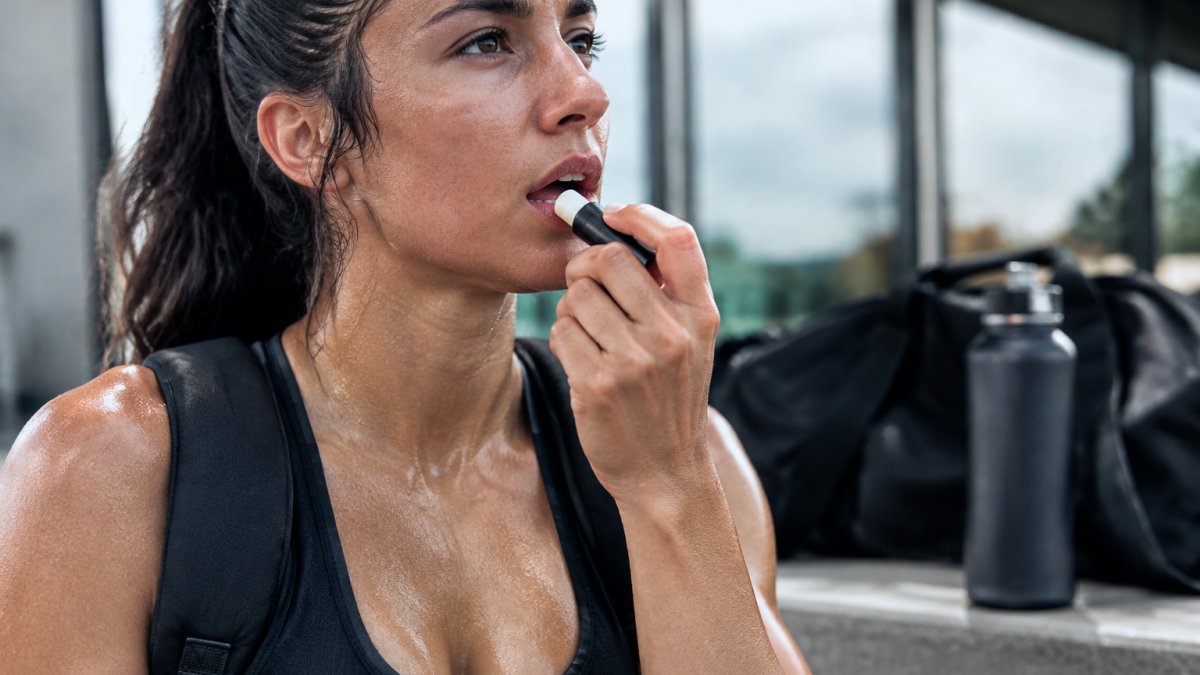
- Apply before you leave. A solid layer before exposure beats a thin layer applied after you are already dry. Coat the full lip, including the border where sun hits first.
- Reapply at every break. Every two hours minimum, sooner if you are sweating heavily. Tie it to something that already happens, the water break, the end of a set, the top of a climb.
- Reapply after eating or drinking. Both wipe product off; a bottle mouthpiece and a quick sip are enough to strip a thin layer.
- Cover the corners. Cracks start at the mouth corners where product gets missed. Angle the applicator so the corner gets the same layer as the center.
- Apply again after training. Conditioning after sweat and wind is when repair matters. This is also when Zombie Lips' built-in cleaning applies as it goes on.
If you want the lip care paired with skin recovery, the Regenerate RX + Zombie Lips care kit covers both. For a full training-day lineup, the four-product care kit with RX, Vital, Infusion, and Zombie Lips puts everything in one bag.


Sport-Specific Exposure: Why One Routine Does Not Fit Every Athlete
Most outdoor advice treats "outside" as one condition. It is not. The sport changes where the UV comes from and how fast product leaves your lips.
- Running. Steady sweat and constant airflow dry the lips from both sides. Reapply at each turnaround or water stop; a handheld bottle is your reminder.
- Cycling. Hours on the bike with wind at face level and hands that cannot easily reach a balm. Apply a full layer before you clip in, and carry the balm in a jersey pocket, not a saddlebag.
- Skiing and snowboarding. Snow reflects UV upward onto your lips and chin. Apply before the first lift and at every lift ride.
Application Amount and Real-World Reapplication
Most athletes apply too little. You want a visible layer, not a quick swipe. In the real world, reapply after every round, every water break, and every wipe of the mouth.
| Situation | Reapply | Why |
|---|---|---|
| Steady training, moderate sweat | Every 2 hours | Standard exposure window |
| Heavy sweat or water exposure | Every 60-90 minutes | Product lifts off |
| High altitude or snow | Every hour | Reflected UV raises exposure |
| After eating or drinking | Immediately | Product wiped away |
| Cold sore tingle | 3+ times daily | Per product directions |
That is the gap. Build the routine so it happens without thinking, and your lips stay intact through the whole season.
Frequently Asked Questions
What is the best protection for lips in the sun?
The best approach combines a physical barrier with consistent reapplication. Look for broad-spectrum coverage, water resistance for sweaty sessions, and a formula you will actually reapply every two hours and after eating or drinking. Zombie Lips conditions dry lips with coconut oil, shea butter, beeswax, and candelilla wax, and is formulated so each application also cleans as it goes on, which matters when you are outdoors and away from a sink.
How often should athletes reapply lip protection outdoors?
Plan on every two hours during continuous sun exposure, and sooner after heavy sweating, wiping your mouth, eating, or drinking. Water and sweat resistance help, but no lip product survives a full training session untouched. Keep a second Zombie Lips within reach in your gym bag or glovebox so reapplication is not a decision, just a habit. For cold-sore care, begin at the first tingle and apply a minimum of three times daily per the product directions.
Can lip sunscreen help prevent cold sores?
Sun exposure is a known trigger for cold-sore outbreaks in people who carry HSV-1, so sun protection is a sensible habit alongside other steps. Lip care does not treat or cure the virus. Zombie Lips is formulated for cold-sore care when that first tingle appears, applied a minimum of three times daily and continued according to the product directions. Pair sun protection with early action at the tingle stage for the best results.
Is an all-natural lip balm enough for outdoor sports?
It depends on the formula and how you use it. Zombie Lips combines conditioning ingredients like coconut oil and shea butter with protective beeswax and candelilla wax, and is formulated so each application cleans as it conditions. For long sun sessions, layer it with a broad-spectrum SPF product and reapply both every two hours. All-natural does not mean set-and-forget; it means the ingredients earn their place.
